
LinkedIn transforms how professionals discover connections by introducing artificial intelligence directly into its search functionality. The Microsoft-owned platform now enables users to find the right people using conversational queries instead of complex filters.
How LinkedIn’s AI Search Changes Professional Networking
Over the past two years, LinkedIn has integrated AI across multiple features, including content creation, ad campaigns, hiring tools, and personalized feeds. However, the company has finally addressed one of its most critical functions: people search.
Earlier this year, LinkedIn rolled out an AI-powered job search feature exclusively for U.S. members. Now, the company extends this natural language capability to finding professionals on the platform. Read the story on LinkedIn
Search Like You Think: Natural Language Queries
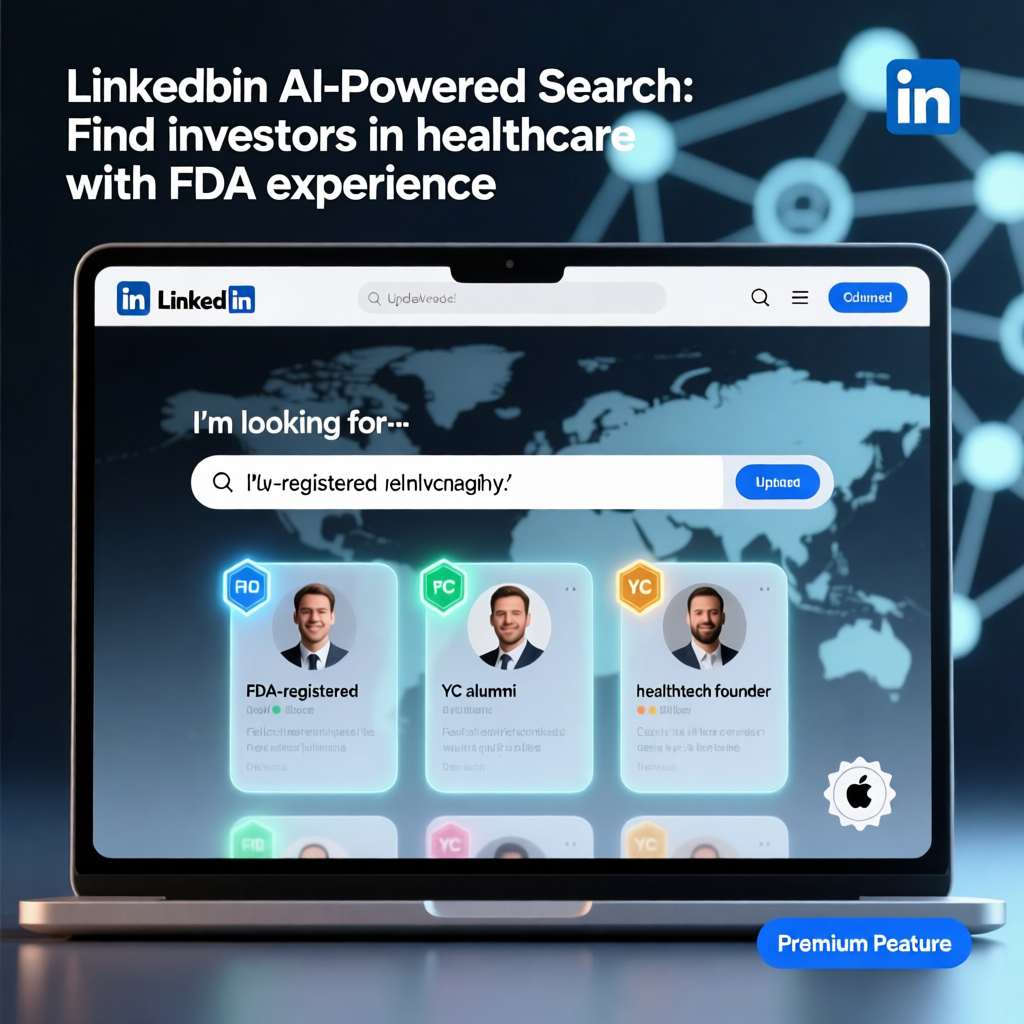
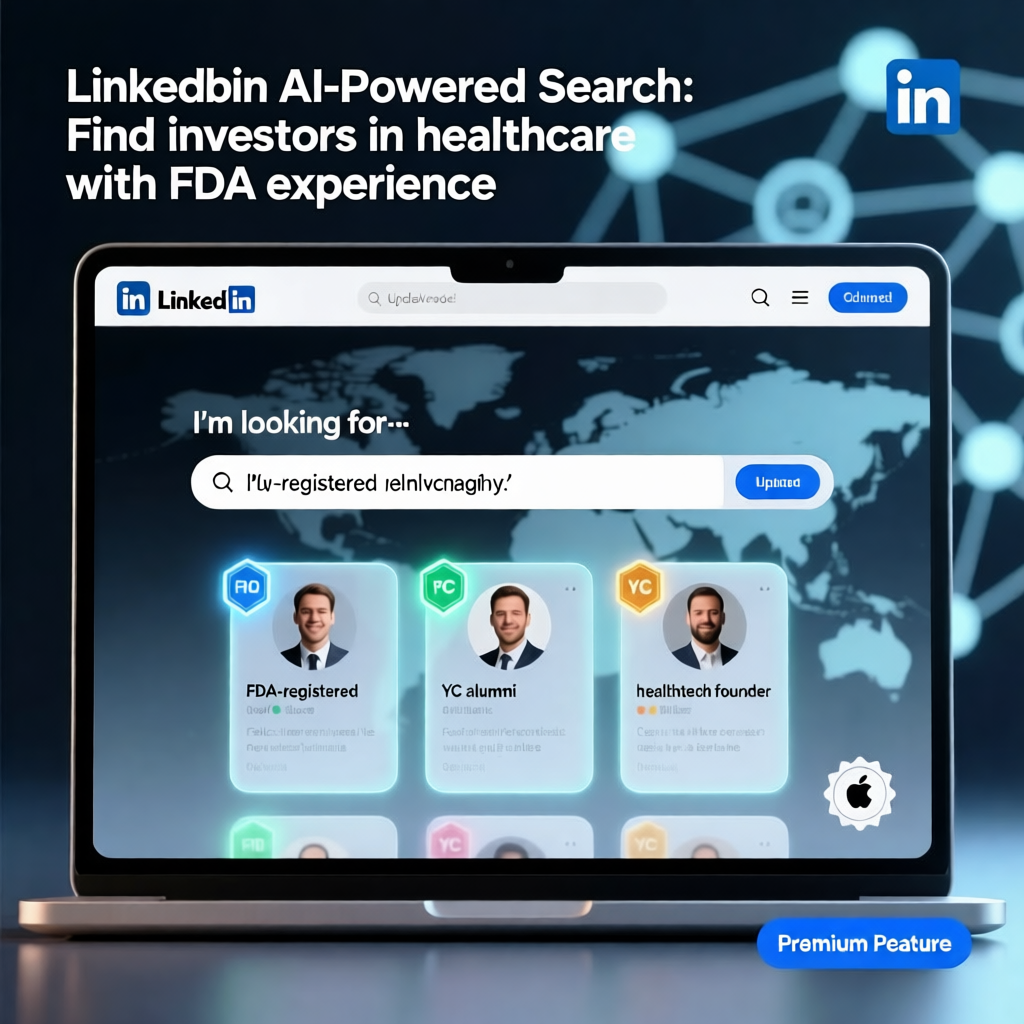
Instead of wrestling with complicated filters and exact keywords, users can now type conversational queries. For example, you can search for “Find me investors in the healthcare sector with FDA experience” or “people who co-founded a productivity company and are based in NYC.”
Furthermore, you can ask questions like “Who in my network can help me understand wireless networks?” The system interprets your intent and delivers relevant results without requiring precise terminology.
Why Traditional LinkedIn Search Needed an Upgrade
Previously, LinkedIn’s search system required users to know exact job titles or navigate through numerous filters. Moreover, professionals often struggled to discover the right connections because they didn’t know which combination of search terms would work.
“With lexical search, you have to know the exact title of the person, or you need to wrestle with filters to find the right person, maybe,” explains Rohan Rajiv, LinkedIn’s senior director of product management. “And if you didn’t know the right combination, the right person remained undiscovered.”
Consequently, many valuable networking opportunities went untapped simply because users couldn’t formulate the perfect search query.
Real-World Applications Drive Adoption
During early testing phases, LinkedIn observed diverse use cases for AI-powered search. Professionals utilize this feature to identify potential job opportunities, expand their professional networks, and accelerate career advancement.
Additionally, users employ the tool to find mentors, discover industry experts, and connect with thought leaders in their fields.
The Broader AI Search Revolution
LinkedIn joins a growing movement of platforms integrating AI into search functionality. As users increasingly turn to chatbots like ChatGPT and Perplexity for answers, established search engines respond aggressively.
Google, Bing, Brave, and DuckDuckGo have all launched AI-powered answer features. Meanwhile, several startups focus specifically on AI-driven people search solutions. Reddit has also invested heavily in AI search capabilities while restricting access to its platform data.
Interestingly, LinkedIn appears frequently in AI agent demos and assistant showcases. However, unlike Reddit, the Microsoft-owned company hasn’t implemented strict data access restrictions yet.
LinkedIn’s Cautious Approach to AI Agents
“I think we are still early in this age of browsers and how they are working on behalf of people,” Rajiv notes. “I think over time, we will have a more sturdy policy [around browsers].”
He adds that many demos attempt to analyze LinkedIn networks, but finding a substitute for the authentic platform proves challenging. “This is sort of an area where I think it is going to be hard to find a substitute for the real thing because this is the worst the search has ever been,” Rajiv emphasizes.
Rollout Strategy and Future Expansion
Currently, LinkedIn offers AI-powered people search exclusively to premium subscribers in the United States. However, the company plans to expand availability to additional markets in the coming months.
Users with access notice an updated search bar displaying “I’m looking for…” instead of the traditional “Search” prompt. This subtle change signals the conversational nature of the new functionality.
Current Limitations and Ongoing Improvements
Despite its promise, the AI search isn’t flawless. The system produces different results when users search for “people who co-founded a YC startup” compared to using “Y Combinator” in the query.
Similarly, searching for “people who co-founded a voice AI startup” occasionally surfaces profiles with LinkedIn’s “top voice badge” rather than actual voice AI founders. These inconsistencies highlight the complexity of understanding user intent.
Nevertheless, LinkedIn actively works on refining how the search tool interprets queries. The company acknowledges these limitations while continuing to enhance the system’s comprehension capabilities.
What This Means for LinkedIn Users
This update represents a significant shift in how professionals navigate LinkedIn’s vast network. Instead of memorizing job titles, company names, and industry jargon, users can now search conversationally.
As a result, discovering relevant connections becomes more intuitive and accessible. Premium subscribers gain a powerful tool for networking, business development, and career advancement.
Looking ahead, the expansion to international markets will bring these capabilities to millions more professionals worldwide. Meanwhile, LinkedIn continues to refine its technology to deliver increasingly accurate and relevant results. Visit here.