

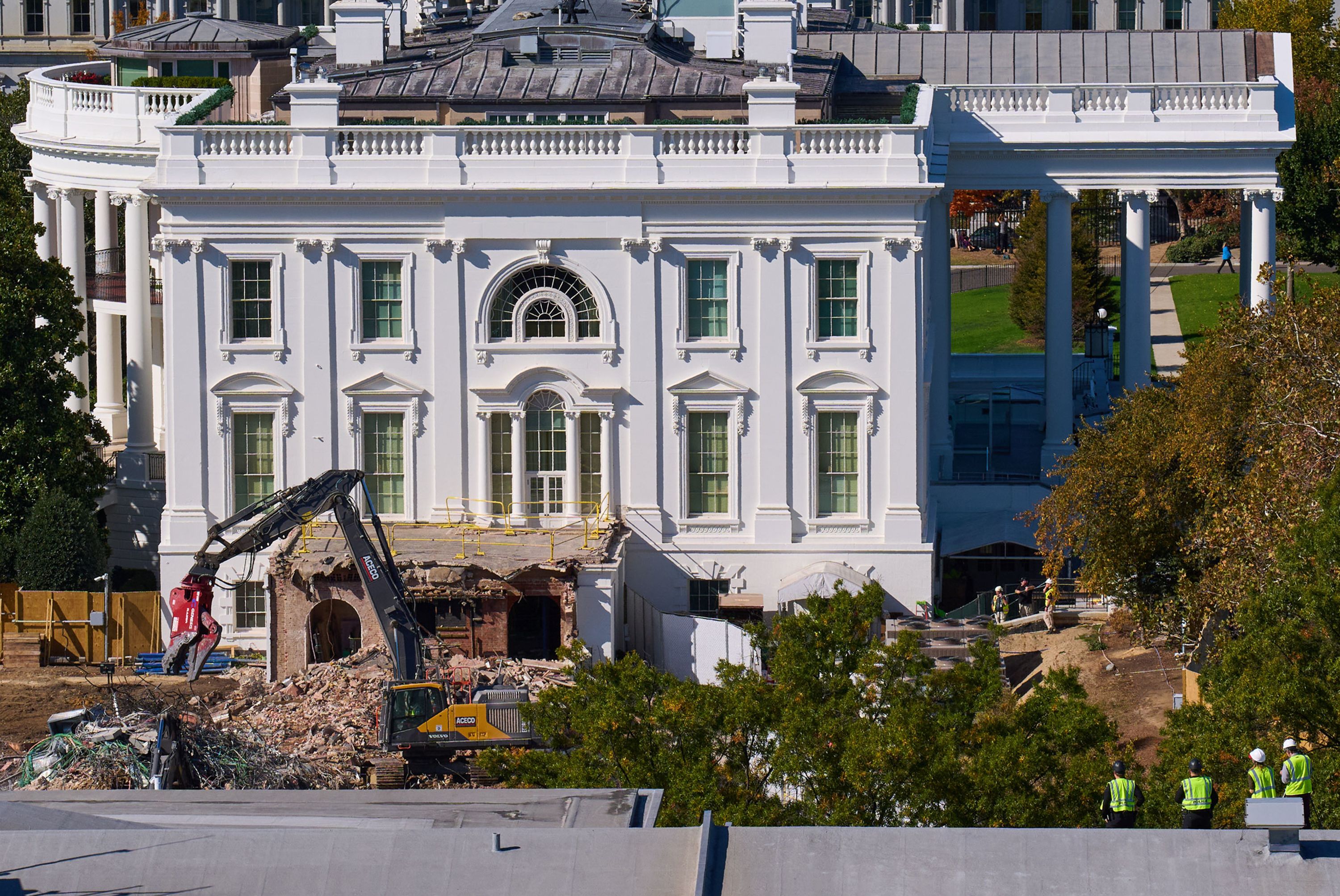

President Donald Trump has reportedly begun dismantling the East Wing of the White House in Washington, D.C., to make way for an opulent new grand ballroom. The project is estimated to cost around $300 million, an undertaking that the administration claims will be entirely funded by private donations — not by taxpayer dollars.
According to a donor list published by the White House, some of the nation’s most prominent tech giants and influential corporations have committed to supporting the endeavor. Names such as Amazon, Apple Inc., Google LLC, Meta Platforms, and Microsoft Corporation are all listed among donors. Notably, Google-owned YouTube has reportedly committed over $20 million to the project as part of a controversial settlement involving lawsuits filed by Trump in 2021.
You can read more about that settlement here and its origins here.
In addition to the major tech firms, the donor list also features a significant presence of cryptocurrency and blockchain-sector players: companies such as Ripple Labs, Tether America, Coinbase Global, and individuals like Cameron Winklevoss and Tyler Winklevoss (each listed separately) show up on the list. Moreover, major players in the defense, telecommunications, and industrial sectors such as Lockheed Martin, Comcast Corporation, T‑Mobile US, and Palantir Technologies are also among the contributors.
This convergence of high-level corporate interests and a presidential renovation project raises fresh questions about the relationship between politics, business influence, and public trust. Critics argue that such a lavish private-funded upgrade of a historic public institution could blur the lines between personal presidency, private benefactors, and public heritage. Others highlight the potential for influence-peddling or the perception thereof — especially when beneficiaries include companies under regulatory scrutiny or involved in high-stakes litigation.
Supporters, however, maintain that if the process is fully transparent and keeps public funds completely out of it, a privately funded enhancement of the White House might be a responsible means of preserving national heritage without tapping into taxpayer dollars.
Regardless of viewpoint, the project marks a bold shift in approach: using private capital to transform iconic government spaces. And with the price tag at a staggering $300 million, the world will be watching both the transformation and its broader implications for governance, corporate influence, and public institutions.
The 30jili app? Fire! Runs like a charm on my phone, even when my internet’s acting up. Top marks! 30jili app