

OpenAI unveils a revolutionary update that reshapes how users interact with artificial intelligence. The company introduces collaborative group chat functionality within ChatGPT, enabling multiple users to work together with AI assistance. This breakthrough feature transforms ChatGPT from a personal assistant into a collaborative workspace.
Understanding ChatGPT’s New Group Chat Feature
OpenAI rolls out shared conversation capabilities that allow teams, families, and friend groups to collaborate with AI simultaneously. Unlike traditional individual AI interactions, this innovation creates dynamic spaces where several participants contribute together.
The pilot program launches across four strategic markets: Japan, New Zealand, South Korea, and Taiwan. Additionally, OpenAI makes this feature available across all membership levels, including Free, Go, Plus, and Pro subscriptions.
This marks OpenAI’s initial venture into social AI experiences. Furthermore, the company plans to gather user insights during this testing phase before expanding globally.
Why Collaborative AI Conversations Matter
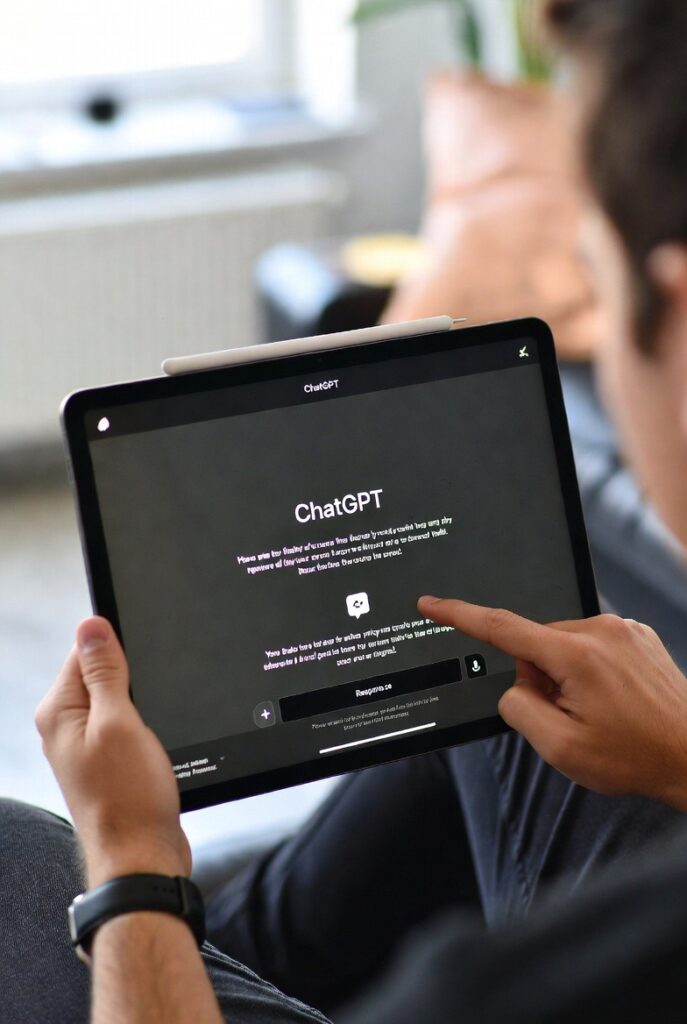
Traditional AI assistants operate in isolation—one person talks to the AI alone. However, group conversations fundamentally change this paradigm. Teams can now brainstorm collectively, families can plan events together, and students can collaborate on assignments with AI support.
Moreover, this eliminates the cumbersome process of copying and pasting AI responses between messaging apps. Everyone participates directly in the same conversation thread. Consequently, collaboration becomes more efficient and natural.
The social element delivers unprecedented value for teamwork. Organizations no longer need separate tools for AI assistance and group communication. Instead, both functions merge seamlessly within one platform.
Personal Use Cases for Group AI Chats
Organizing Events and Activities
Planning group activities becomes remarkably simpler with shared AI conversations. For instance, coordinating a weekend getaway with friends now involves one collaborative discussion where ChatGPT compares destinations, suggests itineraries, and recommends essential packing items.
All participants contribute their preferences simultaneously. Meanwhile, ChatGPT processes everyone’s input and delivers personalized recommendations that satisfy all requirements.
Home Improvement and Design Projects
Partners and roommates can tackle design challenges together using group AI chats. Whether planning a garden renovation or selecting artwork for living spaces, collaborative conversations facilitate better decision-making.
ChatGPT contributes design suggestions, style comparisons, and visualization ideas. As a result, everyone shares their vision while receiving professional-grade guidance throughout the process.
Resolving Group Decisions
Selecting restaurants that accommodate everyone’s dietary needs often creates challenges. Similarly, settling debates among friends typically requires neutral mediation.
Group AI chats solve both situations elegantly. ChatGPT evaluates everyone’s requirements, proposes suitable options, and offers unbiased perspectives. Therefore, groups reach decisions faster and more harmoniously.
Professional and Academic Applications
Enhancing Workplace Collaboration
Professional teams can brainstorm strategies, research topics, and develop content together. Rather than working independently and consolidating results later, colleagues collaborate in real-time with AI guidance.
Marketing departments can explore campaign concepts while ChatGPT generates variations. Similarly, product development teams can evaluate features while receiving technical insights and user experience perspectives.
Supporting Student Group Projects
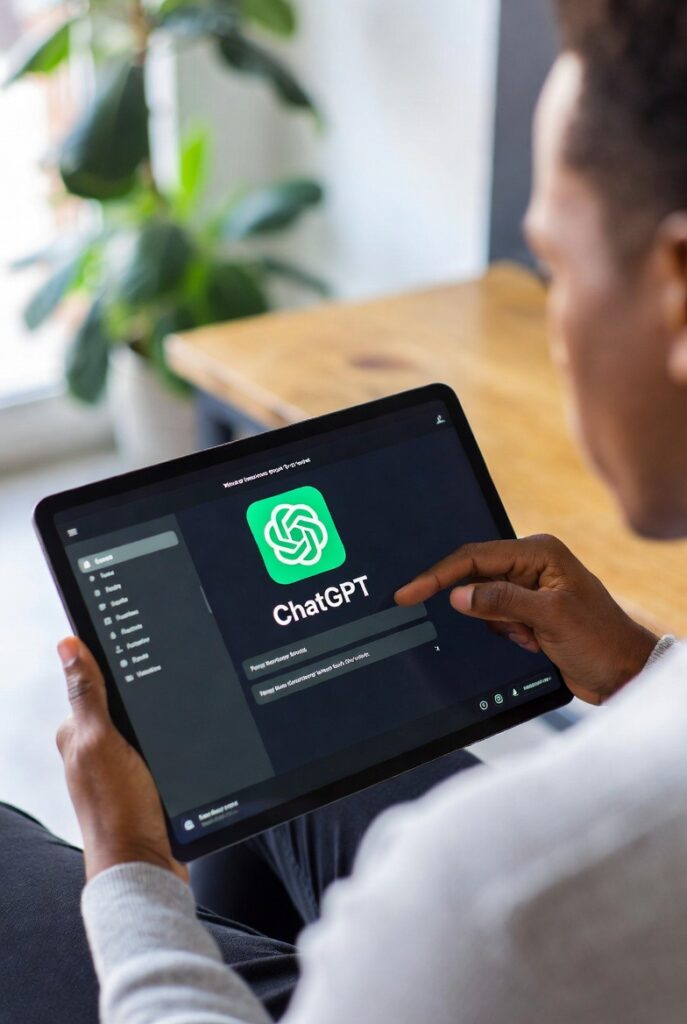
Academic collaborations benefit tremendously from shared AI assistance. Students working on research papers, presentations, and group assignments become more productive and efficient.
ChatGPT helps organize research materials, summarize scholarly articles, and structure arguments. Meanwhile, all team members contribute questions, share resources, and refine concepts collaboratively.
Streamlining Meeting Management
Teams can prepare for crucial meetings by discussing agenda items with AI support. ChatGPT helps anticipate potential questions, formulate responses, and organize discussion points.
Following meetings, groups can review outcomes together while ChatGPT summarizes key decisions, identifies action items, and clarifies responsibilities.
Step-by-Step Guide to Using Group Chats
Creating Your First Shared Conversation
Starting a collaborative chat requires minimal effort. Simply tap the people icon at the top right corner of any ChatGPT conversation window.
When you add participants to existing conversations, ChatGPT automatically duplicates the chat as a new group thread. Importantly, your original private conversation remains completely separate.
Adding Group Members
You can invite anywhere from one to twenty participants by sharing a secure link. Additionally, any group member can redistribute this link to bring more people into the conversation.
Upon joining your first group chat, you’ll create a simple profile featuring your name, username, and photo. This helps everyone identify conversation participants clearly.
Managing Group Conversations
OpenAI organizes group chats in a dedicated sidebar section for convenient access. This organizational structure prevents confusion between personal and shared conversations.
The interface functions similarly to standard ChatGPT exchanges. However, multiple participants now contribute simultaneously, creating engaging and dynamic interactions.
Advanced Capabilities and Smart Features
Context-Aware Response System
ChatGPT demonstrates sophisticated conversational intelligence in group settings. The AI monitors discussion flow and determines appropriate times to contribute versus remaining silent.
This contextual awareness prevents the AI from overwhelming conversations or interrupting natural human exchanges. Nevertheless, participants can always mention “ChatGPT” explicitly when they need immediate assistance.
Expressive Emoji Reactions
OpenAI equips ChatGPT with emoji reaction capabilities, adding personality to group interactions. This feature humanizes the AI’s presence and creates more engaging conversations.
Additionally, the AI incorporates profile photos when relevant. For example, ChatGPT can generate personalized images featuring group members’ photos upon request.
Intelligent Model Selection
Group conversations utilize GPT-5.1 Auto, which dynamically selects optimal models for each response. The system considers both prompt complexity and the responding user’s subscription level.
Consequently, Pro subscribers receive outputs from more powerful models compared to Free users. This architecture ensures performance matches each participant’s membership tier.
Comprehensive Tool Integration
Group chats support extensive ChatGPT functionality, including:
- Real-time web search
- Image upload and analysis
- Document upload and processing
- AI image generation
- Voice dictation support
These capabilities enable rich, multimedia collaboration beyond simple text exchanges.
Fair Usage Limitations
Rate limits activate only when ChatGPT generates responses—not during human-to-human messages. Furthermore, ChatGPT responses count toward the specific user’s limit who receives the answer.
This equitable system encourages free participation while preventing system abuse. Moreover, it maintains sustainable usage across different subscription tiers.
Customization and Control Options
Managing Group Settings
Tap participant avatars to access comprehensive management features. You can assign group names, adjust membership, and configure notification preferences.
These controls ensure groups remain organized as they evolve. Additionally, you can tailor settings to match each group’s specific needs.
Personalized AI Instructions
Each group supports unique customization for ChatGPT’s behavior. Participants can specify contextual information, communication tone, and personality preferences.
Professional groups might instruct ChatGPT to maintain formal language and business focus. Conversely, casual friend groups might prefer relaxed, humorous interactions.
This adaptability ensures ChatGPT responds appropriately across different social contexts and collaboration requirements.
Privacy Protections and Security Measures
Isolated Personal Memory
OpenAI maintains strict boundaries between group chats and individual conversations. Your personal ChatGPT memory never influences group interactions.
Additionally, ChatGPT doesn’t create new memories from group discussions. This prevents private context from appearing in collaborative spaces and vice versa.
However, OpenAI explores more sophisticated memory controls for future releases. Users might eventually choose whether ChatGPT applies memory within specific group contexts.
Participant Control and Consent
You must actively accept invitations before joining group conversations—participation never occurs automatically. Furthermore, all members can view current participants and exit groups whenever desired.
Members can remove other participants, except for group creators, who can only remove themselves by leaving. This structure prevents hostile takeovers while preserving creator authority.
Youth Safety Enhancements
OpenAI implements additional protections when minors participate in group chats. If any participant under eighteen joins, ChatGPT automatically restricts sensitive content for all members.
Parents and guardians can completely disable group chats through comprehensive parental control settings. This empowers families with complete oversight of children’s AI interactions.
Technical Architecture Details
Cross-Platform Accessibility
Group chat functionality operates seamlessly across mobile and web platforms. This universal compatibility ensures collaboration continues regardless of device preferences.
All authenticated ChatGPT users across Free, Go, Plus, and Pro plans can access the feature. However, availability currently remains limited to initial pilot regions during testing.
Strategic Regional Deployment
OpenAI intentionally begins with concentrated regional testing in Japan, New Zealand, South Korea, and Taiwan. This measured approach allows comprehensive feedback collection and experience refinement.
Based on early user responses, OpenAI will expand to additional markets and potentially modify features before worldwide deployment.
The Evolution of Collaborative AI
Beyond Initial Group Features
OpenAI considers group chats merely the foundation of shared ChatGPT experiences. The company envisions comprehensive evolution into a complete collaborative platform.
Future developments might include persistent team workspaces, project-specific AI specialists, and deeper productivity tool integration. Additionally, voice and video capabilities could create even richer collaborative environments.
Advancing Social Intelligence
As more users engage with group features, OpenAI will enhance ChatGPT’s social capabilities. The AI will learn optimal contribution timing, facilitation techniques, and when to observe silently.
This progression will transform ChatGPT into an increasingly effective collaborator that amplifies rather than disrupts human interactions.
Enterprise and Education Expansion
While currently targeting individual users, group capabilities suggest significant enterprise potential. Organizations might deploy team-specific AI assistants featuring shared context and organizational knowledge.
Educational institutions could similarly implement classroom-specific ChatGPT instances supporting collaborative learning while maintaining appropriate content governance.
Maximizing Group Chat Effectiveness
Establishing Clear Guidelines
Define group purposes and behavioral expectations early. Determine whether groups focus on specific projects, ongoing collaboration, or casual assistance.
Additionally, align on notification preferences and participation standards. Some groups require immediate responses, while others function better with flexible contribution timing.
Optimizing Custom Instructions
Fully leverage custom instructions to shape ChatGPT’s contributions. Provide relevant background about group objectives, preferred communication styles, and specific requirements.
Well-designed instructions significantly enhance ChatGPT’s relevance and value within particular collaborations.
Maintaining Human-AI Balance
Remember that ChatGPT augments rather than replaces human collaboration. Use AI to supplement discussions without allowing it to dominate conversations.
Encourage all participants to share unique perspectives and expertise. Meanwhile, leverage ChatGPT for information synthesis, idea generation, and analysis.
Comparison with Alternative Tools
Traditional Messaging Platforms
Unlike WhatsApp, Telegram, or Signal, ChatGPT group chats integrate AI assistance directly into conversations. Users avoid switching between separate messaging and AI applications.
Furthermore, ChatGPT comprehends conversation context automatically, offering relevant suggestions without requiring explicit queries.
Workplace Collaboration Suites
Tools like Slack, Microsoft Teams, and Google Workspace provide extensive collaboration features. However, they lack native AI that participates as an active collaborator.
ChatGPT group chats address this gap, though currently missing some organizational features of dedicated workplace platforms.
Creative Collaboration Tools
Platforms like Miro, Figma, and Notion excel at visual collaboration. ChatGPT group chats complement these tools by adding AI-powered analysis, suggestions, and content refinement.
Teams might use ChatGPT for initial brainstorming before transitioning to specialized tools for implementation.
Addressing Common Concerns
Understanding Data Privacy
Users naturally question how OpenAI handles group chat data. The company maintains strict privacy standards, though group conversations differ from private interactions.
Remember that all group chat content becomes visible to every participant. Exercise appropriate judgment with sensitive information sharing.
Accessibility Across Tiers
Group chat availability across all subscription levels democratizes collaborative AI access. Free users enjoy identical collaborative capabilities as Pro subscribers, albeit with different rate limits.
This inclusive philosophy encourages widespread adoption and experimentation with collaborative AI technologies.
Geographic Availability
The initial pilot concentrates on select Asian and Oceanic markets. Users in other regions cannot currently access group chat features.
OpenAI hasn’t specified expansion timelines, though broader availability seems certain based on anticipated user demand and feedback.
Impact on AI Adoption Patterns
Socializing Artificial Intelligence
Group chats fundamentally shift public perception and usage of AI technologies. Rather than isolated productivity tools, AI assistants become integrated into social interactions.
This normalization accelerates AI adoption as skeptical users observe friends and colleagues benefiting from collaborative AI experiences.
Transforming Work and Learning
As group chats expand, they’ll likely revolutionize collaborative work and education. Teams will increasingly expect AI assistance during group projects and problem-solving sessions.
Educational institutions must develop policies and best practices for AI-assisted group learning, balancing benefits against academic integrity considerations.
Future Development Roadmap
OpenAI commits to learning from pilot participants. User feedback will directly influence feature refinements, expansion strategies, and development priorities.
The company explicitly frames group chats as an early milestone toward comprehensive shared ChatGPT experiences. Consequently, users should anticipate continued innovation and enhancement.
As ChatGPT evolves as a collaborative partner, it will help people generate ideas, reach decisions, and express creativity together. The vision extends beyond individual productivity toward collective achievement.
Moreover, OpenAI will continuously refine features based on actual usage patterns. Early adopters play crucial roles in shaping how collaborative AI develops and improves.
M