
microphones under 3000 rupees let’s learn. Your audience will forgive shaky footage. They won’t forgive bad audio.
That single fact separates successful content creators from those who quit after three videos. Poor sound quality breaks trust, kills watch time, and signals to every viewer that you’re not serious about your content — no matter how good your visuals look.
The great news? You don’t need to spend ₹10,000 or more to fix it. The budget mic market in India has grown significantly, and several options under ₹3000 now deliver audio that would have cost twice as much just a few years ago.
This guide breaks down the best microphones under ₹3000 in India for 2026 — by use case, not just specs — so you pick the right one the first time. 👉 Check Latest Price on Amazon https://amzn.to/3Pkdmdm

Why Good Audio Matters More Than You Think
Researchers at the University of Southern California found that poor audio quality causes viewers to rate content as less credible and less professional — even when the information itself is solid. Your mic isn’t just a gear choice. It’s a credibility signal.
Compare your phone’s built-in mic with even a ₹1,500 external microphone, and the difference hits immediately. One sounds like you’re calling from a moving auto-rickshaw. The other sounds like you mean business.
Budget mics in 2026 also perform far better than their predecessors. Improvements in capsule manufacturing and mass production have driven costs down dramatically. A ₹2,500 mic today performs the way a ₹5,000–6,000 mic did a few years back. That shift makes this the best time to enter the market as a budget buyer. 🔥 Grab It on Amazon Before Price Changes https://amzn.to/3Pkdmdm
What to Look For Before You Buy
Connection Type
USB mics plug directly into laptops and computers — no extra hardware needed. Lavalier (clip-on) mics connect via 3.5mm jack and work with smartphones, cameras, and laptops. Choose based on your primary recording device, not based on which looks more impressive in product photos.
Pickup Pattern
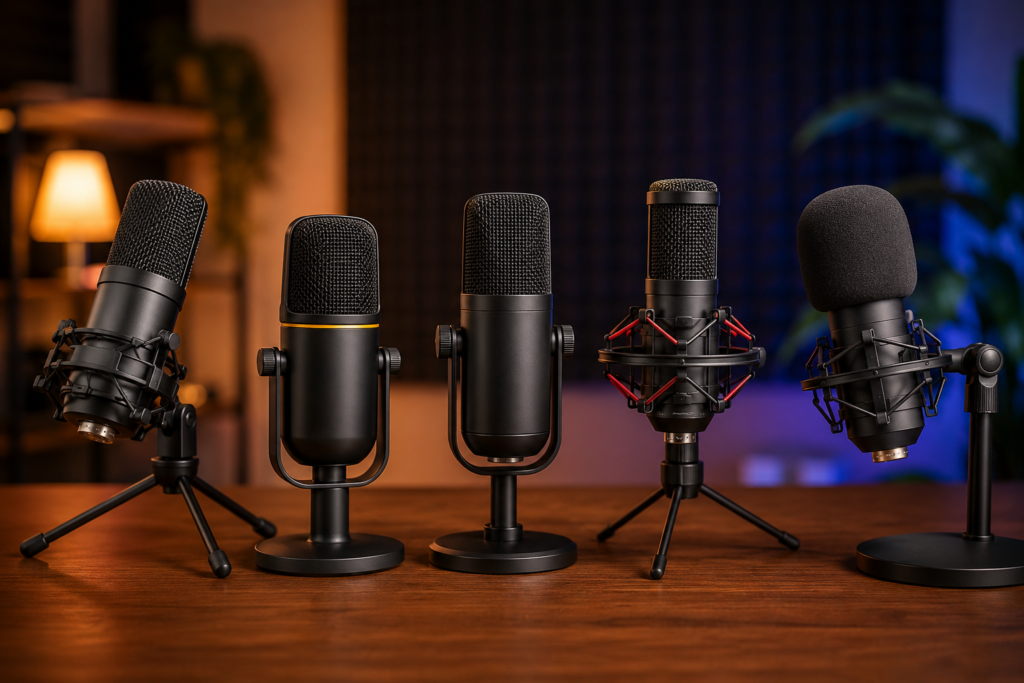
A cardioid pattern captures sound from the front and rejects noise from the sides and rear. This works well for solo recording at a desk. An omnidirectional pattern picks up sound from all directions, which suits interviews, group conversations, and vlogging on the move.
Build Quality
Metal-bodied mics reduce handling noise and last longer. Cheap plastic mics sound hollow when you bump them and often crack at stress points within months. At the ₹1,500–₹3,000 price point, several options now use full metal construction.
Audio Resolution
Most mics in this range record at 16-bit / 44.1kHz — the same standard used on CDs. That’s more than enough for YouTube, podcasts, Reels, and streaming. You don’t need 24-bit at this stage.
Top Microphones Under ₹3000 in India for 2026
1. Maono AU-903 — Best Overall USB Mic
Price range: ₹1,700 – ₹2,300
The Maono AU-903 earns the top spot because it does everything a beginner or intermediate creator needs — and nothing they don’t.
Plug it into your laptop via USB, and Windows or macOS recognizes it instantly. No drivers. No software installs. No frustration. You open your recording software and start capturing audio in under two minutes.
The all-metal body feels noticeably more premium than what you’d expect at this price. The included desk stand holds steady instead of tipping over at the first nudge. The cardioid pickup pattern focuses on your voice and reduces keyboard noise, fan hum, and room echo from the sides.
The headphone jack for zero-latency monitoring is a genuine feature at this price. You hear yourself in real time as you record — no delay, no guesswork about what you sound like.
Users on Amazon and Flipkart consistently note that it handles typical Indian home environments well — ceiling fans, street traffic, and AC units get filtered out to a reasonable degree by the cardioid pattern combined with proper positioning.
Best for: YouTube videos, voiceovers, podcasting, Zoom calls, streaming. Skip if: You need to record on a smartphone or outdoors
2. Boya BY-M1 — Best Lavalier for Mobile Creators
Price range: ₹690 – ₹900
The Boya BY-M1 sits well below the ₹3,000 ceiling, but it earns a spot here because it solves a specific problem brilliantly: recording clear audio on the move.
Clip it to your collar, plug the 6-meter cable into your phone or camera, and walk around freely. That long cable is a genuine advantage for vloggers, outdoor shooters, and interview-style content where you don’t want to stay fixed in one spot.
The omnidirectional capsule captures natural, warm-sounding audio. It won’t isolate your voice the way a cardioid mic does, but it produces an organic sound that works well for talking-head videos and on-location content.
The main thing to watch: it runs on an LR44 battery. Keep spare batteries in your bag. Running out mid-recording is avoidable but annoying when it happens. Battery life typically runs several hours per charge, but it will die at the worst possible moment if you don’t stay prepared.
Best for: Vlogging, mobile recording, outdoor shoots, interviews, travel content. Skip if: You record primarily at a desk or need strong background noise rejection
3. Fifine K669B — Best for Streaming and Gaming
Price range: ₹2,300 – ₹2,600
The Fifine K669B looks like it belongs in a setup twice its price. The all-metal construction weighs 550 grams — heavy enough to stay planted on your desk even when you accidentally brush the cable.
The cardioid condenser capsule captures balanced, natural-sounding audio without artificially boosting treble or bass to sound impressive in a quick demo. That matters during long recording sessions and editing, where artificial frequency bumps become fatiguing fast.
The volume knob on the body lets you adjust input levels instantly without touching software settings. That small detail makes a real difference during live streams and gaming sessions where your voice level changes.
USB plug-and-play compatibility covers Windows, Mac, and PlayStation. The Fifine picks up more ambient noise than mics with tighter cardioid patterns, but correct positioning and free noise suppression tools (OBS Studio, Audacity) handle that effectively.
The included tripod stand is functional but basic. If you use this mic regularly, a ₹500–800 boom arm improves your recording position significantly and removes desk vibrations from the audio.
Best for: Streaming, gaming commentary, podcasting, and desktop voiceovers. Skip if: You record in loud environments without noise reduction tools Get Studio-Clear Audio Under ₹3000 — View on Amazon https://amzn.to/3Pkdmdm
4. Maono PM422 — Best Feature-Rich Option Under ₹3,000
Price range: ₹2,500 – ₹2,999
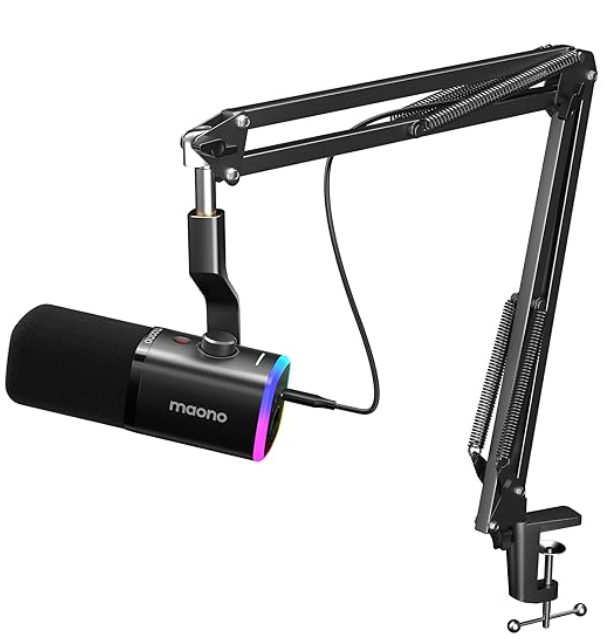
The Maono PM422 packs the most features into this price range. It offers four pickup patterns — cardioid, omnidirectional, bidirectional, and stereo — which gives you genuine flexibility for different recording scenarios.
The mute button with LED indicator lets you cut your audio instantly during streams or calls without fumbling through software. The real-time headphone monitoring, gain control knob, and headphone volume control put all the essential adjustments directly on the mic body.
Audio quality sits above average for this price range. The cardioid mode performs well in typical home recording conditions. The stereo mode works well for capturing interviews or acoustic instruments like a guitar.
If you want the most versatile single mic under ₹3,000, the PM422 delivers it. If you just need a simple, reliable recording for one specific use case, the Maono AU-903 or Fifine K669B gives you the same core performance at a lower cost.
Best for: Podcasters, streamers, video editors, and anyone who wants multiple recording setups from one mic. Skip if: You want simplicity and don’t need the extra modes
5. Boya BY-MM1 — Best for Camera and DSLR Users
Price range: ₹1,900 – ₹2,500
The Boya BY-MM1 fills a gap that USB mics can’t — it mounts directly onto your camera’s hot shoe and connects via 3.5mm jack, making it the right choice if you shoot video on a DSLR, mirrorless, or action camera.
The supercardioid pickup pattern gives it tighter noise rejection than a standard cardioid, which helps when you’re shooting in environments you can’t fully control. It works without batteries, drawing power from the camera’s microphone input.
Build quality is solid for the price. The foam windscreen handles light wind for outdoor shooting. If you frequently shoot outdoor vlogs or event videos on a camera (not a phone or laptop), this mic solves the right problem at the right price.
Best for: DSLR and mirrorless camera users, event recording, travel vloggers who carry a dedicated camera. Skip if: You record at a desk or primarily use a smartphone
How to Make Any Budget Mic Sound Better
The right mic is only half the equation. These free techniques instantly improve your recordings.
Position your mic correctly. Place it 15–20 cm from your mouth, angled slightly off-axis at 30–45 degrees. Direct positioning exaggerates plosive sounds (P, B, T). Slight angling reduces this without softening your overall sound.
Treat your room first. Hard walls and bare floors cause echo. Hanging a thick curtain behind you, recording near a wardrobe full of clothes, or even placing a folded blanket over your desk creates natural sound absorption. You don’t need foam panels to improve your acoustics noticeably.
Eliminate noise at the source. Switch off ceiling fans for short recording sessions. Close windows. Tell family members you need ten minutes of quiet. Prevention takes 30 seconds. Fixing noise in post-editing takes 30 minutes.
Use free software tools. Audacity’s noise reduction feature removes consistent background hum with two clicks. OBS Studio’s noise suppression filter works well for streamers. NVIDIA RTX Voice and Krisp (free tier) use AI to remove background noise in real time on calls and streams.
Accessories Worth Buying — and Ones to Skip
Worth buying:
- A foam pop filter or windscreen (₹150–₹300) removes harsh plosive sounds
- A basic boom arm (₹500–₹900) eliminates desk vibrations and lets you position the mic precisely
- Spare LR44 batteries if you use the Boya BY-M1
Not worth buying yet:
- Expensive shock mounts for USB mics — the included stands handle normal desktop use fine
- XLR audio interfaces — unnecessary for USB mics and requires a completely different setup approach
- Premium pop filters at ₹800–₹1,500 — they don’t outperform basic foam windscreens significantly at this budget level
Quick Comparison: Which Mic Should You Buy?
| Use Case | Best Pick | Price |
|---|---|---|
| YouTube / Podcasting at desk | Maono AU-903 | ₹1,700–₹2,300 |
| Vlogging / Mobile recording | Boya BY-M1 | ₹690–₹900 |
| Gaming / Streaming | Fifine K669B | ₹2,300–₹2,600 |
| Maximum features | Maono PM422 | ₹2,500–₹2,999 |
| DSLR / Camera users | Boya BY-MM1 | ₹1,900–₹2,500 |
Frequently Asked Questions
Can I use these mics with my Android or iPhone? The Boya BY-M1 and BY-MM1 connect directly via 3.5mm jack. USB mics like the Maono and Fifine models need a USB OTG adapter for Android, and compatibility varies. For consistent smartphone use, a lavalier mic works more reliably.
Do these mics work for singing or music recording? They handle casual vocal covers and demo recordings well. For serious music production or instrument recording, you’ll want a dedicated audio interface and condenser mic setup at a higher price point. For voice-first content — YouTube, podcasts, streaming — these mics perform excellently.
Do I need paid recording software? No. Audacity (free), OBS Studio (free), and your operating system’s built-in recording tools work perfectly with all USB mics on this list. Your computer recognizes them as standard audio input devices automatically.
How do I reduce background noise during recording? Position the mic close to your mouth, use a cardioid mic pattern, switch off fans and ACs when possible, and apply Audacity’s noise reduction or OBS’s noise suppression filter in post. That combination removes 90% of typical home recording noise.
Final Take
Good audio doesn’t require a big budget. It requires the right mic for the right situation — and the knowledge to use it well.
The Maono AU-903 covers most desk-based creators at excellent value. The Boya BY-M1 handles every mobile scenario at a price that removes all risk. The Fifine K669B gives streamers and gamers a sturdy, balanced option with on-body controls. The Maono PM422 delivers professional-level flexibility for creators who want versatility without exceeding ₹3,000.
Pick the mic that matches your actual setup, not the one with the longest spec list. Position it correctly, treat your room even slightly, and use free noise reduction tools. Do those three things and your audio will outperform creators spending three times more on gear — but ignoring the basics.
Start recording. Listen back critically. Adjust once. You’ll be surprised how fast “budget” starts to sound like “professional.” See Why Thousands of Indian Creators Trust This Mic → Amazon https://amzn.to/3Pkdmdm
Disclosure: This article contains affiliate links. We may earn a small commission if you purchase through our links, at no extra cost to you. This helps us keep creating free content for creators.
Here are 10 FAQs for your WordPress post — written to target Google’s People Also Ask boxes and rank for long-tail keywords:
Frequently Asked Questions
Q1. Which is the best microphone under ₹3000 in India for YouTube?
The Maono AU-903 is the best microphone under ₹3000 for YouTube creators in India. It delivers plug-and-play USB connectivity, a cardioid pickup pattern that focuses on your voice, and zero-latency headphone monitoring — everything a desk-based YouTube creator needs without any complicated setup.
Q2. Can I use a budget microphone under ₹3000 for professional podcasting?
Yes. The Maono AU-903 and Maono PM422 both deliver clear, professional-sounding audio for podcasting under ₹3000. The PM422 also offers four pickup patterns, making it ideal for solo episodes and guest interviews on the same setup. Pair either mic with free noise reduction software like Audacity and your podcast will sound significantly more professional.
Q3. Which microphone under ₹3000 works with a smartphone in India?
The Boya BY-M1 works directly with smartphones via its 3.5mm jack — no adapters needed. It clips onto your collar and comes with a 6-metre cable, making it the best choice for mobile creators and vloggers who record on Android or iPhone.
Q4. Is the Boya BY-M1 good enough for YouTube videos?
Yes, especially for outdoor and mobile YouTube content. The Boya BY-M1 delivers warm, natural audio that sounds significantly better than any built-in phone or camera mic. For desk-based YouTube recording, a USB condenser like the Maono AU-903 gives you better voice isolation and clarity.
Q5. What is the difference between a USB mic and a lavalier mic?
A USB mic plugs directly into your laptop or desktop computer and works best for desk-based recording — YouTube, podcasting, streaming, and Zoom calls. A lavalier mic clips onto your collar and connects via 3.5mm jack to your smartphone or camera, making it better for mobile recording, vlogging, and outdoor shoots. Choose based on where you record most often.
Q6. Do I need soundproofing to use a budget microphone under ₹3000?
No. You can significantly improve your recordings without spending anything on soundproofing. Record near a wardrobe full of clothes, hang a thick curtain or blanket behind you, and switch off ceiling fans before recording. These free room treatment techniques reduce echo and background noise in most Indian home environments.
Q7. Which budget mic under ₹3000 is best for gaming and streaming in India?
The Fifine K669B is the strongest choice for gamers and streamers under ₹3000. It features an all-metal body, an on-body volume control knob for instant level adjustments during live streams, and plug-and-play USB compatibility with Windows, Mac, and PlayStation.
Q8. Do microphones under ₹3000 work for online teaching and coaching?
Yes. The Maono AU-903 and Maono PM422 both work excellently for online educators on Zoom, Google Meet, Microsoft Teams, and recorded course content. Their cardioid pickup patterns focus on your voice and reduce background classroom or home noise, making your teaching sessions sound clear and professional.
Q9. How do I reduce background noise when recording with a budget mic?
Four techniques work best together — position the mic 15–20 cm from your mouth at a 30–45 degree angle, record in a room with soft furnishings, switch off fans and close windows before recording, and apply noise reduction in free software like Audacity or OBS Studio after recording. No paid tools or soundproofing panels are necessary.
Q10. Are microphones under ₹3000 available on Amazon India?
Yes. All five microphones in this guide — the Maono AU-903, Boya BY-M1, Fifine K669B, Maono PM422, and Boya BY-MM1 — are available on Amazon India. Prices fluctuate slightly, so check the current listing before purchasing.
👉 Shop All Budget Microphones on Amazon India