
Master Your Message: The Ultimate Guide to Readability Checker Tools
In the fast-paced world of digital creation, you only have a few seconds to capture your audience’s attention. Whether you’re an author publishing on Amazon KDP, a tech enthusiast building PDF tools, or a YouTuber like the creator of “Strong by the Compound,” your success depends on one thing: Readability.
If your text is too complex, your readers will bounce. If it’s too simple, you might lose your authority. A Readability Checker Tool is the bridge that ensures your message is perfectly tuned for your specific audience. The Readability Checker Tool is remarkable.
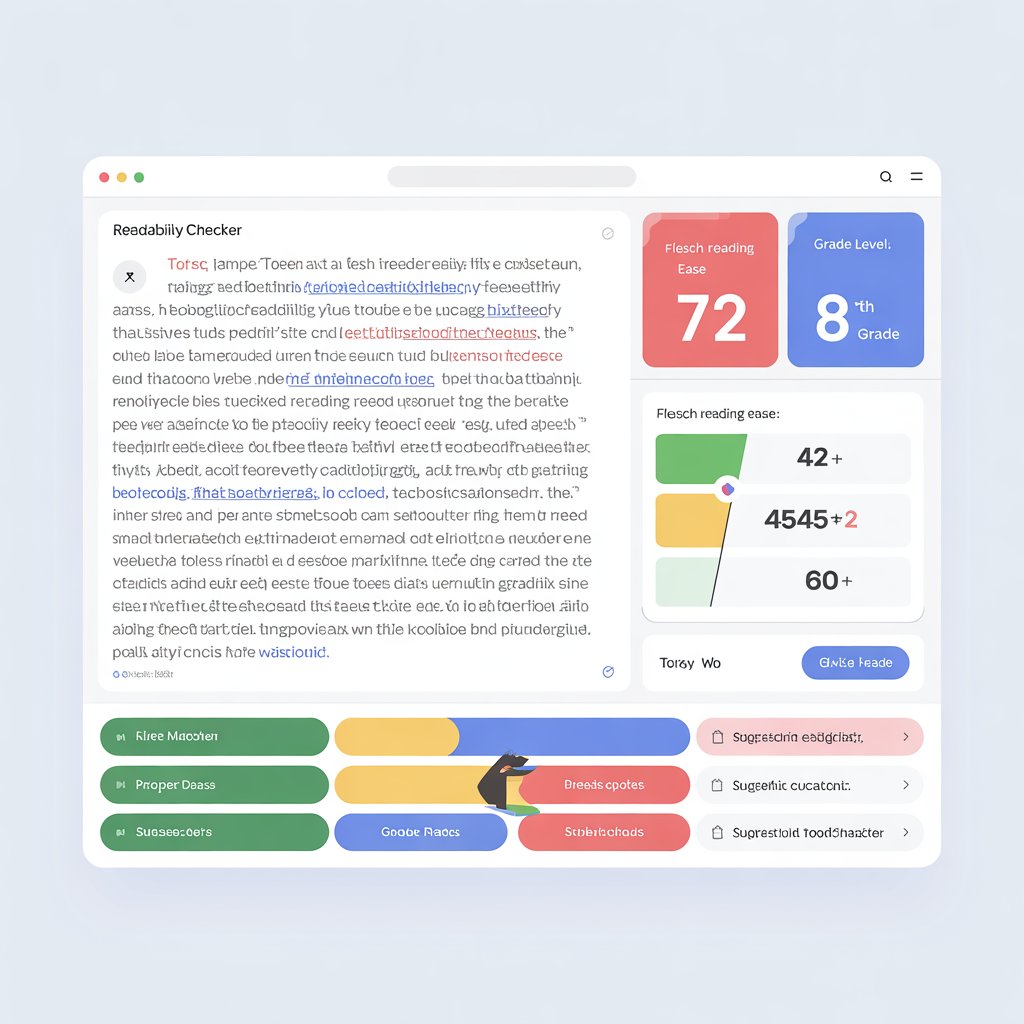
What is a Readability Checker Tool?
A Readability Checker is an AI-powered utility that analyzes your text and provides a score based on how easy it is to understand. It doesn’t just look for spelling errors; it calculates the “cognitive load” required to read your content. By measuring sentence length, syllable counts, and word complexity, it tells you exactly what grade level is required to comprehend your writing. Readability Checker Tool
In 2026, readability isn’t just a “nice-to-have” feature—it’s a ranking necessity. Search engines and social algorithms now prioritize content that users actually stay to read.
The Science Behind the Score: Key Formulas
Most professional tools, including the one here at Digital Creator Hub, use globally recognized mathematical formulas to grade your text:
1. Flesch Reading Ease
This is the most common metric. It gives you a score from 1 to 100.
- 90-100: Very Easy (5th-grade level). Best for casual blogs.
- 60-70: Standard (8th-9th grade). Ideal for general web content.
- 0-30: Very Difficult (College graduate). Reserved for legal and technical papers.
2. Flesch-Kincaid Grade Level
Instead of a 100-point scale, this formula tells you the specific US School Grade Level. If a tool gives you a “7.5,” it means a 7th or 8th grader can easily understand it. This is the gold standard for KDP authors and educators.
3. Gunning Fog Index
This index focuses on “complex words” (words with three or more syllables). It’s highly effective for business writing and technical manuals to ensure you aren’t using too much “gobbledygook.”
Why Readability is the Secret Sauce for SEO
Google’s algorithms (like the Helpful Content Update) are designed to think like humans. They track Dwell Time (how long someone stays on your page) and Bounce Rate.
- Higher Engagement: When content is easy to digest, users read to the end. This tells Google your page is valuable.
- Featured Snippets: Google loves to pull “Quick Answers” into the top of search results. These are almost always written at a 6th to 8th-grade level.
- Voice Search: With more people using AI assistants, your content needs to “sound” natural. Readable text is much easier for AI to read aloud clearly.
5 Pro Tips to Improve Your Readability Today
- Keep Sentences Short: Aim for an average of 15–20 words per sentence.
- Use the Active Voice: Instead of saying “The cricket match was won by India,” say “India won the cricket match.” It’s punchier and easier to follow.
- Kill the Jargon: Unless you are writing for scientists, replace “utilize” with “use” and “subsequently” with “later.”
- Visual Breaks: Use bullet points and subheadings. A “wall of text” is the fastest way to kill readability.
- Address the Reader: Use “You” and “Your.” It makes the text feel like a conversation, which naturally lowers the perceived complexity. Readability Checker Tool
Frequently Asked Questions (FAQs)
Q: Does a low grade level mean my writing is “dumbed down”? A: Not at all. Writing clearly is a sign of intelligence. Even the Harvard Business Review and The New York Times aim for an 8th to 10th-grade level. It’s about making your ideas accessible, not making them simple.
Q: Can I use this for non-English text? A: Most formulas (like Flesch-Kincaid) are designed for the English language’s syllable patterns. While you can paste other languages, the grade levels may not be 100% accurate for Hindi or other regional dialects. The Readability Checker Tool has many uses.
Q: How often should I check my readability? A: Every single time you publish. Whether it’s a 200-word product description or a 2,000-word blog post, a 10-second check can save you from losing half your audience.
Q: What is the “SMOG Index”? A: SMOG stands for “Simple Measure of Gobbledygook.” It is a formula often used in the healthcare industry to ensure medical instructions are safe and easy for patients of all education levels to understand. Readability Checker Tool
Q: Is readability the same as SEO? A: No, but they are partners. SEO gets people to your page; readability keeps them there. Without readability, your SEO efforts are wasted. The Readability Checker Tool is awesome.